Etiquetas

1976 1985 1995 1996 1997 2002 2016 Afganistán Albert Sánchez Piñol Aldous Huxley Alemania Alessandro Baricco Alexandría Andes Angola Antoine Saint-Exupéry António Lobo Antunes Argentina Atwood Auster Autoficción Barcelona Barnes Beatnik Berlin Biafra Bioy Casares Borges Boston Bruce Chatwin Buechner Buenos Aires Bukowski Camilo Jose Cela Cannery row Carlos Castaneda Castaneda Catalunya Chile Chimamanda Ngozi Adichie Ciencia Ficción Coetzee Congo César Aira D.H. Lawrence Dave Eggers Dostojewskij Douglas Adams Egipto Enrique Vila-Matas España Estonia Fernando Pessoa Fogwill Francia Gabriel García Márquez George Orwell Glavinic Goethe Gonçalo M. Tavares Graham Greene Greene Guerra Civil Espaniola Handke Harry Hole Haruki Murakami Helena Corbellini Henry Trujillo Herman Koch Hermann Hesse Herrndorf Houellebecq Irak Irán Isla Islam Italia Jack Kerouac Jo Nesbo John Irving Juan José Millás Juan Pablo Villarino Juan Rulfo Julian Barnes Kehlmann Lawrence Durell Levrero London Luxemburgo Mairal Malvinas Manuel da Silva Ramos Marc-Uwe Kling Margaret Atwood Mario Levrero Mario Vargas Llosa Mazzantini Montevideo Munich Murakami Nicaragua Niccolò Ammaniti Nigeria Nueva York Octavio Paz Olguín Oriente Osvaldo Baigorria Pablo Ramos Paris Patagonia Pedro Paramo. latinoamericano Perú Politica ficcion Premio Nobel Puig Rafik Schami Reino Unido República Dominicana Robert Musil Rusia Sacheri Saer Schnitzler Sergio Olguín Siria Skármeta Sudafrica Suecia Tango Tomás Eloy Martínez Trujillo Viena abuela aburrido academicos africa alegoría alienación amazonas america amistad amor anarquismo arge arte austríaco autor autoritarismo autostop aventura benedetti biologia brasil caballos campo canada canguru capitalismo catalan chatwin chinos ciencia ficcion ciudad civilizacion clases sociales clasico clásico cocina colombia colonialismo colores comunismo consciencia contemporáneo crisis economica critica social crotos cuentos cuentos cortos cuidad culpa y inocencia cultura daniel Kehlmann darwinismo depresión derecho desaparecidos desarollo desgracia detectives dialogo diario dictadura dinero distopia distopia/utopia drogas escritura espacio urbano espionaje estados unidos estadounidense estilo de escritura moderna evolucion exilio existencialismo familia fantasia fantástico fauna felicidad feminismo ficción futbol futuro gales gemelos geografia guerilla guerra guerra civil guerrilla hippie hippies historia holandés homosexualidad humor identidad idioma ilustrado imigracion india indigenas infancia infantil inglaterra ingles inmigrantes intercultural intriga italiano john steinbeck joseph conrad jovenes juvenil kafka kafkiano latino latinoamericano lenguaje libros lisboa literatura africana literatura alemana literatura pop lunfardo mar memoria meta-ficcion mexico minirelatos mitologia mitología moderno moral moçambique mujer mujeres multiculturalismo navegar no vale la pena nomada nomadismo non-fiction novela novela corta novela de barrio novela negra nueva novela latinoamericana nómada nómadas obrero occidente okupas onetti oso ostracismo otro libro aleman parabola partido comunista pastiche percepción periodismo persia peru playa poesia poesía policial policíaca poligamia porcelana portugal portugues prostitucion psicoananalisis puerto racismo raza realismo realismo magico realismo. cela relato religion rio ritual de pasaje rui zink sabiduria satira serie: O reino sexo sexualidad siglo XX sigloXIX simulacro sistema escolar soledad sueño surrealismo tremendismo trilogía involuntaria triologia truco turismo unicornios uruguay utopia politica vagabundo vagabundos vargas llosa vejez viaje viajero vida y muerte. vide de campo vigilancia violencia violencia domestica violencia sexual zadie smith
Mostrando las entradas con la etiqueta totalitarismo. Mostrar todas las entradas

29 agosto, 2026

David Eggers - The Circle (2013)


I remember the buzz The Circle caused when it first came out. I don’ t know why I didn’t read it back then. I was probably busy with uni.

It’s a science fiction novel, that hasn’t aged well. Let’s just say a lot of what’s described there, was visionary in 2013 but is completely normal in 2016.

It’s a book about social networks and surveillance going extreme and even towards totalitarianism, all in the name of security, of transparency. Through the eyes of a cast of characters we experience the moral conflict, or lack thereof related to this process.

Mae Holland starts working at a up and coming San Francisco Tech Company called The Circle. The workload is tough at first, but everything around her is high end, innovative, promising and exciting. The Campus is impressive. Possibilities are endless, the future big, glass and steel. The pay and benefits are huge, there is health insurance, after work entertainment like Ted-talk-events and parties. Even gyms, shuttles and dormitories. No one is over 30 years old. Mae enjoys herself, although it becomes clear that the company asks more and more from her. In a corporate culture life-work-balance unwritten rule, after-work activities become mandatory and so are several suggestions the company brings on to her. She is being manipulated and almost blackmailed but she doesn’t realize it one bit. To the reader, however, it is painfully obvious.

Mae starts out in Costumer Experience and in the first week on campus she meets two men. Having separated herself from her last boyfriend for him being a bit too much of a boring country boy she finds herself excited and open to new connections. Each of those men represent a moral stance or attitude to what is happening, Francis working at the Circle as well, is the inventor of chips that are implanted in children's’ wrists in an effort to prevent abduction. He is the anxious type who would do anything in the name of security. In an attempt to be funny the author describes him as a premature ejaculator who asks Mae for a rating (100 out of 100) after each intercourse. Then there is Kalden who is much more attractive to Mae but who seems to be a bad boy, he shows her around the data center cellars and seems to be a kind of spy or hacker, because she’s not able to track him through the internal network and find his socials, nor location. He seems to be the only resistance or critic to all this. And there’s Mercer her ex who is still in good contact with her ageing parents and who writes her letters to warn her. He doesn’t even use the internet.

Little throwback: Back in 2013, I was 25 years old, I owned a Laptop, but Internet at uni never worked and I didn’t own a smartphone until about 2017 or so and taking photos in public was always a bit shameful, to me, at least. I am sure I would have enjoyed the novel a lot more had I read it back then. Not only because the science fiction part still being fiction, but also because I was a much less exigent and easy to please reader.

The company uses slogans much like the regime in Orwell’s 1984:

SECRETS ARE LIES

PRIVACY IS THEFT

SHARING IS CARING

As a promotion, they make her an influencer with a camera around her neck at all times, counting live viewer numbers and commentaries. She is “going transparent”. The only place to talk is on the toilet where the audio gets turned off for 3 minutes. Soon privacy, anonymity, or off-grid living becomes a crime. Even voting the president has to occur through the verified social media identity. Will the Circle be completed, will Mae chose to be in it or out of it?

Now my take on this.

There’s about 200 pages (out of 500) we could simply cut out and the book would be so much more fluid and readable. All the times someone comes in and adds another screen to Mae’s desk asking her to also tend to the messages coming through on those, and she just sits there and compulsively answers client’s queries and surveys, striving to get approval ratings of a 100 percent, and comments 23493 comments on all the mandatory social media networks, all those pages could have been shorter, she has 9 screens, the work and the ratings give her dopamine, we get it. Even when Mercer and the hacker-spy try to explain to her why they think it is bad to ”complete” the circle, we get pages of explaining like we would explain totalitarianism to a child, but in a boring, non creative way.

The amount of foreshadowing or foreseeing is still scary. Today, mostly in the US but increasingly world wide, we have normalized to have:

- AI everywhere, controlled by private companies

- data centers

- being asked to review and give 5 stars (even to our Job center counselors)

- health trackers on our wrists

- Meta sunglasses with invisible cameras

- small cameras everywhere

- Manhunts, wars and violent attacks that are broadcasted live (f.ex. the ICE killings in the US)

- Influencers who have social media as “a job” chasing likes and views and monetizing them

The Circle is lead by “The three Wise Men” who are idolized and would be something like Mark Zuckerberg, Peter Thiel and Elon Musk. Even people like me, who is always with one foot on the anti- side of things, I find myself addicted to daily Instagram stories and my Garmin. But still, even at 24 I knew that a kind of mass participation democracy (only seemingly, because in reality it’s the three wise men who hold all the power in their hands) would lead to death penalties without due trials in justice.

Its hard to identify with Mae because she seems so naive and simple. I mean it’s normal to be like this at 24, acting seemingly in the name of idealism and democracy, but I think the novel would have been a lot more interesting had she not been so one dimensional, or if there was a second point of view, maybe Mae looking back, or maybe narrated in the voice of another character.

So, in summary, I think it’s quite badly written, I didn’t really enjoy it, but I think the idea is good and those kind of books are an important thought exercise.

 
Lastly, I feel I get disappointed quite frequently by The New York Times book recommendations. It's a bummer because I enjoy their journalism.

17 enero, 2019

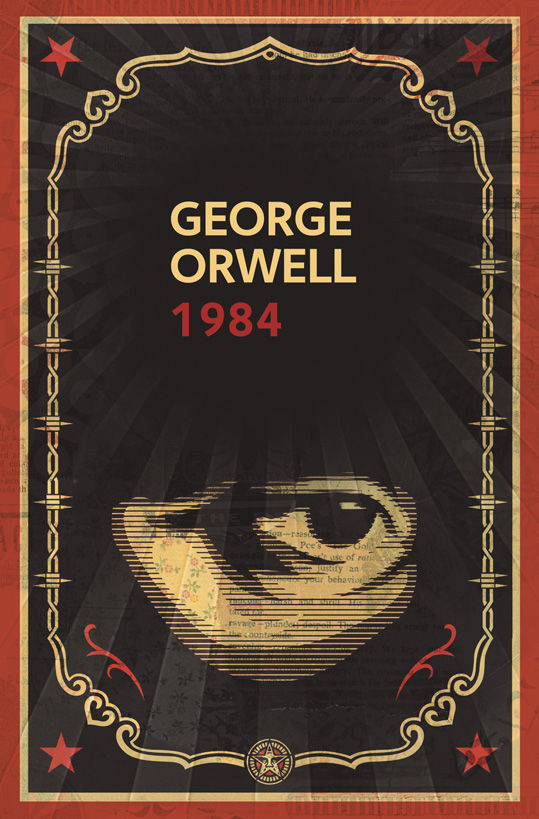
George Orwell - 1984 (1949)

Quizás no queda mucho que decir sobre este libro, es tan conocido y ampliamente apreciado, se lee en las escuelas, y quien no lo leyó sabe de qué va. Es una de las distopías más importantes del siglo XX y representa junto a El mundo feliz de Aldous Huxley (1932) una versión de los posibles caminos que podría tomar la sociedad pos-segunda guerra mundial.
Me sorprendió lo oscura que es la historia. El escritor indaga a fundo en cuanta tortura es preciso para corromper a un hombre (yo acá pienso que se quebraría con mucho menos) y para quebrar su identidad, voluntad y consciencia completamente. Me costó leerla hasta el final, no me parece una lectura nada fácil pues toda la parte final es desgarrador. Es un poquito previsible, pero creo que vale la pena, a veces la literatura tiene que doler.
Los dos escritores, Huxley y Orwell evocaron sociedades futuras que hoy - aproximadamente 70-80 años  en el futuro - nos asombran por ser modelos con alguna semejanza a lo que efectivamente se tornó realidad. No literalmente, esto seria una exageración, pero en muchos detalles y lógicas sí encontramos que sus previsiones y advertencias están fundamentados. A su manera, los dos hablan de alienación y totalitarismo y no es solo una imagen de la amenaza del comunismo soviético como algunos lo quieren poner. Se suelen postular como opuestos, la de Huxley la sociedad del placer y del hedonismo y la de Orwell como la de autoritarismo, represión, odio y escasez artificial. Las emociones se gestionan con la droga soma o con sesiones de "two minutes hate" respectivamente. Brainwashing y condicionamiento con slogans e industria cultural hay en las dos distopías. En la novela de Orwell las guerras continúan pero de manera muy diferente, así la guerra no amenaza la existencia del estado, pero sirve como escusa para limitar acceso a  los bienes para los ciudadanos.
Ambos son historias de rebelión ("follow the small rules so you can break the big") contra los sistemas totalitarios, sistemas en que no es fácil rebelarse porque están muy controlados, tanto físicamente como en los pensamientos que los sistemas indoctrinan y permiten. En las dos novelas el amor y la familia son problematizados. También se las puede leer como ensayos políticos que analizan las lógicas de diferentes ideologías, del afán de juntar poder como fin en si mismo, el comportamiento de clases sociales y desarrollo de la tecnología. El capitulo IX de 1989 es una larga reflexión sobre la razón del estado relativo al poder, al bienestar/riquezas y la función de la guerra en la sociedad jerarquizada.
En 1989 no hay leyes, pero hay Ministerios:  el Minitrue: Ministry of Thruth = Ministerio de Bellas Artes, Entretenimiento y noticias  el Miniluv: Ministery of Love = Ministerio de la Guerra  y el Miniplen: Ministery of Plenty = Ministerio de Economía. El protagonista trabaja en el Ministerio que se encarga de modificar, o de actualizar la memoria. A veces simplemente se borra, así como se borra y apaga toda la información perteneciente a personas fallecidas, vaporizing. Para contribuir con un ejemplo personal y quizás banal, cuando hace unos meses el sr. facebook inesperadamente me bloqueó mi cuenta me di cuenta de que en todo lo que es el mundo de Internet me pueden apagar as memorias y listas de contacto sin "proceso judicial" y sin dejar rastro de un segundo a otro. Hay telescreens imaginados por Orwell que son como los televisores que tenemos hoy (vease Black mirrow etc.) en día, emiten, pero también tienen cámaras para registrar y así vigilar a la población de forma personalizada. En general, la tecnología es más avanzada y más al servicio de los ciudadanos en la novela Huxley de que en la de Orwell. Existe también la complementar cultura de denuncia con niños espías y Thought Police. En Brave new world las clases sociales están ordenados de ABDC; en 1989 se confronta la gente del gobierno (inner circle and outer circle) versus los "proles" que son basicamente unos felices idiotas. En Brave new world Henry Ford es venerado como un dios, en 1989 es el ficticio Big brother que funciona como líder virtual omnisciente y omnipotente y cuja cara con bigote adorna los pósters y campañas del Estado. Analogamente existe la personalización del enemigo del pueblo, Goldstein, un judío revolucionario que escribió un misterioso libro. En 1989 no hay libros otros que los que escribe el gobierno, como las canciones se hacen con la tecnología de una novel writing machine y un versificador y un caleidoscopio que junta frases al azar y torna las obras en éxitos de venta - lejos de la realidad del 2018? vean este ejemplo real. Sin embargo escribir y amar parecen ser las únicas maneras de defender la propria sanidad y lucidez. Además de una introducción muy buena de Thomas Pynchon, la edición de Penguin viene con Appendix sobre los principios de Newspeak. Sin duda cada sociedad construye y modifica su lenguaje. También pienso que lenguaje inventado por Orwell se parece al twitter, hoy en día plataforma de comunicación predilecta para presidentes, en el sentido de que el vocabulario se reduce, o a alternative facts o fakenews. Hay palabras prohibidas y palabras nuevas, muchas palabras se simplifican. Por ejemplo, ser individualista es un crimen, lo llaman ownlife. Pensar cosas prohibidas se llama crimethink or facecrime. Aquí un excerto:
"No word in the B vocabulary was ideologically neutral. A great many were euphemisms. Such words, for instance, as joycamp (forced-labour camp) or Minipax (Ministry of Peace, i.e. Ministry of War) meant almost the exact opposite of what they appeared to mean. Some words, on the other hand, displayed a frank and contemptuous understanding of the real nature of Oceanic society. An example was prolefeed, meaning the rubbishy entertainment and spurious news which the Party handed out to the masses. Other words, again, were ambivalent, having the connotation ‘good’ when applied to the Party and ‘bad’ when applied to its enemies."
En mi opinión, lo que hace 1989 una novela tan impactante es su psicología. Destacan principios psicológicos del control a través de la "disonancia cognitiva" que es la base del concepto de doublethink. ("Cuando la zorra no consigue alcanzar las uvas, decide que no las quiere"). El concepto fue muy popular en la psicología de los años 50, esto es, después de la novela estar publicada. En el debate de los alternative facts and fake news vale la pena pensar un poco sobre esto y sigo pensando en doublethink, es un principio fascinante, muchas veces subconsciente y al mismo tiempo manipulador y protector de la coherencia de nuestros egos.


Archivo del Blog

Translate