Etiquetas

1976 1985 1995 1996 1997 2002 2016 Afganistán Albert Sánchez Piñol Aldous Huxley Alemania Alessandro Baricco Alexandría Andes Angola Antoine Saint-Exupéry António Lobo Antunes Argentina Atwood Auster Autoficción Barcelona Barnes Beatnik Berlin Biafra Bioy Casares Borges Boston Bruce Chatwin Buechner Buenos Aires Bukowski Camilo Jose Cela Cannery row Carlos Castaneda Castaneda Catalunya Chile Chimamanda Ngozi Adichie Ciencia Ficción Coetzee Congo César Aira D.H. Lawrence Dave Eggers Dostojewskij Douglas Adams Egipto Enrique Vila-Matas España Estonia Fernando Pessoa Fogwill Francia Gabriel García Márquez George Orwell Glavinic Goethe Gonçalo M. Tavares Graham Greene Greene Guerra Civil Espaniola Handke Harry Hole Haruki Murakami Helena Corbellini Henry Trujillo Herman Koch Hermann Hesse Herrndorf Houellebecq Irak Irán Isla Islam Italia Jack Kerouac Jo Nesbo John Irving Juan José Millás Juan Pablo Villarino Juan Rulfo Julian Barnes Kehlmann Lawrence Durell Levrero London Luxemburgo Mairal Malvinas Manuel da Silva Ramos Marc-Uwe Kling Margaret Atwood Mario Levrero Mario Vargas Llosa Mazzantini Montevideo Munich Murakami Nicaragua Niccolò Ammaniti Nigeria Nueva York Octavio Paz Olguín Oriente Osvaldo Baigorria Pablo Ramos Paris Patagonia Pedro Paramo. latinoamericano Perú Politica ficcion Premio Nobel Puig Rafik Schami Reino Unido República Dominicana Robert Musil Rusia Sacheri Saer Schnitzler Sergio Olguín Siria Skármeta Sudafrica Suecia Tango Tomás Eloy Martínez Trujillo Viena abuela aburrido academicos africa alegoría alienación amazonas america amistad amor anarquismo arge arte austríaco autor autoritarismo autostop aventura benedetti biologia brasil caballos campo canada canguru capitalismo catalan chatwin chinos ciencia ficcion ciudad civilizacion clases sociales clasico clásico cocina colombia colonialismo colores comunismo consciencia contemporáneo crisis economica critica social crotos cuentos cuentos cortos cuidad culpa y inocencia cultura daniel Kehlmann darwinismo depresión derecho desaparecidos desarollo desgracia detectives dialogo diario dictadura dinero distopia distopia/utopia drogas escritura espacio urbano espionaje estados unidos estadounidense estilo de escritura moderna evolucion exilio existencialismo familia fantasia fantástico fauna felicidad feminismo ficción futbol futuro gales gemelos geografia guerilla guerra guerra civil guerrilla hippie hippies historia holandés homosexualidad humor identidad idioma ilustrado imigracion india indigenas infancia infantil inglaterra ingles inmigrantes intercultural intriga italiano john steinbeck joseph conrad jovenes juvenil kafka kafkiano latino latinoamericano lenguaje libros lisboa literatura africana literatura alemana literatura pop lunfardo mar memoria meta-ficcion mexico minirelatos mitologia mitología moderno moral moçambique mujer mujeres multiculturalismo navegar no vale la pena nomada nomadismo non-fiction novela novela corta novela de barrio novela negra nueva novela latinoamericana nómada nómadas obrero occidente okupas onetti oso ostracismo otro libro aleman parabola partido comunista pastiche percepción periodismo persia peru playa poesia poesía policial policíaca poligamia porcelana portugal portugues prostitucion psicoananalisis puerto racismo raza realismo realismo magico realismo. cela relato religion rio ritual de pasaje rui zink sabiduria satira serie: O reino sexo sexualidad siglo XX sigloXIX simulacro sistema escolar soledad sueño surrealismo tremendismo trilogía involuntaria triologia truco turismo unicornios uruguay utopia politica vagabundo vagabundos vargas llosa vejez viaje viajero vida y muerte. vide de campo vigilancia violencia violencia domestica violencia sexual zadie smith

18 noviembre, 2025

Donna Tartt - The secret history (1992)


The secret history is a novel about friendship, youth, about wanting to belong. And about fatal flaws. The structure of the book is very unusual and refreshing as it tells the outcomes in its very first pages, namely the murder that occurs. From the very beginning we know who has done it. But we don’t know how things got there and what happened afterwards.

It’s not a book in which the ending or outcome really matters, but the heart of the book.

It is not really a thriller or mystery or detective novel, but basically a psychological study of a couple young students and their group dynamic, blinded by their love for each other, and for ancient Greek culture. I find those themes fascinating. An emotional roller-coaster, a book to get lost in with its 628 pages.

The novel is set in a liberal arts college in the northeast of the United States, in Vermont, so northern it is almost in Canada. I know not everyone had the same college experience, but for many of us it was this kind of place where we tried to form our adult identities and to connect to others in a way to help building these identities, because we admired those friends, and found them beautiful and knowledgeable, especially if we are a bit insecure. We thought our our college friends will be in our lives forever. We also do a lot of sh*t at college because we think we’re adults but instead we are still so young and influencable.

I do enjoy campus novels, in general. I think its the first time I read something of the “dark academia” genre, except maybe Harry potter. I didn’t know about this genre before first googling this book, it’s basically a trend whereby people wear black coats, write with fountain pens and admire gothic architecture and cold weather. The secret history is as gripping a novel as Harry Potter (I myself was the same age as Harry when the books came out, 12, which is a big reason of why and how I became a reader).


As I said The prologue of The secret history already tells the reader about death of Bunny, a murder, Henry’s idea. In the main part, Richard our narrator is looking back and retelling the story from a later point in time, and then he notices a lot was actually ominous, a lot of details, pointing in the bad way things went, he had initially overlooked. That’s the reason I don't think I can really do spoilers, because it’s all there being said in the beginning, when you read it you get on the emotional journey with the characters even knowing the basic facts of the plot.

The narrator Richard Papen grew up middle class-poor on the west coast, Northern California but not the picturesque California, more like eternal suburbia, where there are no trees, everything flat and dust colored. He arrives at Hampden College a bit by chance – or fate, as he puts it of course, and tries to fit in with the rich kids. He tells us his worst flaw is a morbid longing for the picturesque – for whatever that means, it’s on the reader to figure that out. In any case his choice to study Ancient Greek, a kind of random decision proofs to be fateful.

He stumbles upon the group of friends in the library, they study Greek, the one thing they have in common. Everyone of them is a bizarre character.

In the first weeks at the college, Richard gets a student job and goes talk to Greek professor to let him in his class. Julian Morrow, the Greek prof, seems weird and eccentric. There are rumors about him, he keeps big arrangements flowers in his office. Richard insists, even after the prof saying his course is complete, five students are the limit, one more what be too many (foreshadowing). He convinces him to be taken in, but Student services warn him, it is an exception to the normal functioning of the college to be taught almost exclusively by his Greek teacher, and not necessarily good, if problems occur, he can’t go back and change, but in the end they let him.

So he makes friends with the Greek class group and gets to know them. Charles and Camilla are twins, very close to each other, 20 years old, orphans from Virginia, very much not poor. Francis is a thin and nervous boy, he has a very young mother with a rich Daddy, he has exotic looks, is a red head and wears false glasses. Bunny, full name Edmund, 24 years old, is blond, badly dressed, loud, outgoing. Bunny had the typical American childhood with 4 brothers living in Cape Cod, going sailing, etc. And finally Henry, serious, tall, with classes, cold and smart, he seems to be very close to the Greek teacher, and he has a car.

Bunny takes Richard out for dinner for 300 dollars and then says he forgot his wallet. Eventually Henry comes to the rescue. Francis’ family has a big old house in the country belonging to some aunt of this, which they use to spend the weekends.

In the first Greek class they talk about the necessity to channel dyonistic forces (more foreshadowing here). I would have loved to have more insight into the Greek classes, but the author doesn’t dive further into that. I will contain myself here to not spoil more of the narrative, here.

In Vermont it is winter through many month, very different from California, it snows and gets freezing cold. On Christmas break school shuts down because heating is expensive, everyone is with their relatives back home, but Richard having no money for a flight back home, nor the will to go there, spends winter in a rented room warehouse with whole in the roof and almost dies of pneumonia.

Some of the hints are phrases that stick into one’s mind, like honesty being a dangerous virtue, or beauty being related to terror. Right in the beginning Richard says that he has a morbid longing for the picturesque, which I think is not the same as beauty.

Then – !- they kill him, and we’re just about halfway of the novel - what a setup.

In the aftermath, contrary to the expected, they all get real nervous, every class Bunny is missing and they sit around waiting for him, the tension builds up, some try to distract themselves with normal college life, alcohol, sex with no luck. Now the four of them are bonded for life for the good or the bad of it.

I devoured the The secret history, I loved it, it blew my mind, absorbed me and still, when I handed it to my friends they didn’t even seem to be able to get into it, to connect and found all characters annoying and little relatable. It’s a not perfect novel, and those are rare, but still a very very good one, one of those I can imagine to re read in a couple of years despite getting a bit long in the second half.

I really enjoyed The secret history. I think it has some minor problems, for example, you could say it is not very realistic, or the characters are not really people you could want to deal with, but for me these were minor hiccups, I did connect with Richard, the narrator, and I think the novel is a masterpiece. The secret history was Donna Tartt’s debut novel. She was only 28 years old by the time she published it, which is very impressive. I already bought her other big novel “The Goldfinch” and I can’t wait to read it.


06 octubre, 2025

Dolly Alderton - Ghosts (2020)

to ghost someone = the act or practice of abruptly cutting off all contact with someone (such as a former romantic partner) usually without explanation by no longer accepting or responding to phone calls, instant messages, etc.”1


In this case the Ghosts of the title is also referring to a father losing memories due to dementia, and the protagonist losing her old friendships to their marriages and babies.


My friend referred to it as my sex-and-the-city-novel, and I couldn’t describe it better, it’s all about navigating early adult life, believing or not in marriage and love, about ex boyfriends and dating, about being in your early 30s going out and drink and buying your first house and the anxiety of building a future for you and not getting any younger again. Understandably at this stage of life we sometimes feel still like a child and hesitate with certain decisions or struggle with responsibilities. Notably it’s mostly the men in the novel that are selfish, childish, a bit careless and not even honest about it with themselves.


It is clearly a book written for young women. The main character Nina George Dean just bought her first own flat in London Archway, and is back to dating after her long term relationship broke up. As a first person narrator she is retelling the events that happened in her life between her 32nd to her 33rd birthday, the “strangest year of her life”, which to me personally didn’t feel very strange or extraordinary at all. Her name is associated with George Micheal, who’s song was top of the charts when she was born.


Nina works a kitchen book writer publishing her own books, sufficiently successful as to be able to live from it. She published a book called “Taste”, a second one “The tiny kitchen”, and is now starting her third one, weirdly she chats with her editor about her personal life, I don’t know if this is common. She used to be a English teacher like her father, in fact she is very close to her Dad, who has dementia and is deteriorating which is a very difficult condition to witness and accompany.


Nina’s ex boyfriend Joe now has a new girlfriend, she and Joe were together for 7 years, now she has been single for 2. So, Nina decides it’s time to download a dating app and starts dating again. She starts going out with Max, 37, tall, masculine, surfer type, accountant, a bit insecure or at least introvert. They fall in love, but after 3 months of relationship Max disappears all of a sudden.


A lot of the novel is just reciting stereotypes. Nina and her friends talk about how friends and their wives behave, men want to impress, girls want to make friends. Lola is her only single friend, a yoga girl with eccentric taste clothing, always drinking prosecco or wine, talking probably about astrology (I don’t remember) a dating expert. A fun character, the Samantha of Sex and the City.

Katherine is her oldest friend, now married with children and moving to the suburbs with little time or comprehension for her childless friends. Nina also has to handle a strange new neighbour in her building who doesn’t respect anything of basic conviviality rules.


She has always had a difficult relationship with her mother who seems a hateful selfish person, with not much of personality anyway. This is put on a further strain with her Dad’s health issues.


So this is it, not much else happens. Nina is looking for meaning in life, in the decisions made y the people around her, but instead she finds mostly only pragmatism or convenience which disappoints her, but doesn’t make her lose her optimism.

I don’t regret reading Ghosts, but the characters are a bit flat, the plot a bit short, and it straight out bored me. It’s not really bad, but definitely not good either. I found it hard to identify myself in any of the characters, even as a woman in my (late) 30s. I can't relate to this life personally, I have very few couples among my friends who actually got married and going to the pubs and drink is a thing that I left in my 20s. I also know very few people who still celebrate their birthdays is their 30s with cake and invitations and their parents and all. Nina listens to female serial killer podcasts, the kind of “true crime” (the worst category of podcast, in my opinion this makes her even more pathetic). The narrator starts the novel announcing “The strangest year of her life” which makes you want to read it, but in the end to me it looked like a pretty event-less year except for the father’s health deteriorating.


Looking at the cover it becomes clear to me that I normally wouldn’t have chosen to buy this book, but I had read a nice recommendation somewhere and made an effort to not judge it by its cover.


Not really funny, not deep, not really emotional, but very readable, however a bit boring and predictable. The kind of book you can read with half of your brain switched off, just to wind down before sleeping.


1https://www.merriam-webster.com/dictionary/ghosting


21 septiembre, 2025

John Grisham - The street lawyer (1998)

 
I sometimes like to read legal dramas, I have watched all the hundreds of episodes of the TV series Suits. 
I didn't like The Street Lawyer, I was expecting some twist along the way, and waiting for a big trial in the end, but pressure doesnt really build up and the ending is a short settlement (sorry if that's a spoiler).
The story is predictable from the beginning if you read the information on the cover slap, you know pretty much everything. A rich corporate lawyer has an awakening and decides to get rid of his wealth and help the poor for a very small salary. Instead of designer suits he now wears jeans and cuts onions in homeless shelters. He turns against his former law firm defending a bunch of illegally evicted poor in a nasty lawsuit, but to do so he had to steal a file which puts him in a position where he is threatened to lose his law license and get arrested.
The author paints a picture of 1990's Washington D.C. as a place where the poor and the criminal are abundant, where people are afraid of driving through certain neighborhoods and government social programs are cut back all the time. 
I giggled when reading how different some things were back before we all head cell phones with internet and cameras and files had to be faxed and copied, and newspapers bought at the break of dawn, obviously I remember this world, but it's easy to forget how recently these things changed.
Although 300 something pages, it reads very quickly. The characters are caricaturist and little profound, one-dimensional. Either good or bad, not much more to it. My issue with the ending is that is little credible and a bit cheesy.
The Street Lawyer is an easy read, seems like a book for English-learners. I used less neurons reading the novel than I would use scrolling on you phone, therefore even in a work charged week I was able to read a chapter in the morning and a chapter at night.
This is my second John Grisham read. I know this genre is the type of bestsellers sold in train station shops, I don't remember which other novel by Grisham I have read, I was maybe 18 years old at the time, but it was a legal drama as well and for the vague memories I have of it it was a lot better than that one. 


27 julio, 2025

Sally Rooney - Intermezzo (2024)


Después de leer todas las otras novelas de Sally Rooney, la joven autora irlandesa que está teniendo no poco de fama en los últimos años, tuve que leer Intermezzo, la encomendé con ansias y no me defraudó. 

Esta novela analiza el efecto de la diferencia de edades en la pareja y como el duelo de perder un padre influye la vida personal de dos hermanos. 

Me gustó bastante, es una lectura fácil y llevadera con temas algo pesados. Pienso que Rooney evoluciona como escritora y estoy con curiosidad esperando leer mucho más de ella en el futuro. 

Todas sus novelas exploran caracteres y relaciones amorosos dentro de sus condiciones sociales, más que acontecimientos. En Intermezzo se concentra en una relación de hermanos además en las relaciones que cada hermano tiene con las mujeres. Creo que es la primera novela que tiene personajes masculinos en su centro, sus otras novelas siguen más el punto de vista de la experiencia de mujeres, aunque estén narradas en tercera persona. 

Tenemos los hermanos Peter y Ivan Koubek cuyo padre viene de fallecer después de larga enfermedad. Los dos nunca se llevaron muy bien, quizás también debido a la diferencia de edad, pues Peter le lleva unos 10 años a Ivan y están en etapas diferentes de su vida. 

No es un libro deprimente, - y esto fue una preocupación mía antes de comenzarlo, aunque la temática es menos alegre que los enamoros y desamoros de sus otras novelas, de hecho se lee muy bien, se ríe y se llora. En capítulos alternantes entramos en la cabeza de cada uno de los hermanos y vemos sus perspectiva y luego el punto de vista desde afuera, a través del hermano o la novia.

Ivan, el más joven, es un jugador de ajedrez desde temprana edad, no es profesional porque no vive de eso, pero está ganando títulos muy importantes de alto nivel. Toda la gente lo llama un genio, y le molesta, pues para él el termino está mal porque su ranking en el mundo del ajedrez está bajando y su “talento” de hecho es fruto de horas y horas de estudio y practica. A parte de eso se mantiene con pequeños trabajos freelance, de análisis de datos y similar. No tiene mucho dinero pero no le gusta la idea de buscarse un trabajo de tiempo completo en que no pueda desarrollarse y disfrutar según sus intereses. Vive en un piso compartido y por eso tuvo que dejar su perro Alexei con su madre. Pienso que su carácter de introvertido no le hace realizar que se siente solo.

Peter el hermano mayor es abogado, el orgullo de la familia, aunque en realidad siente que esta carrera no le está dando la vida que soñaba, sí que tiene menos preocupación de dinero pero sigue siendo un trabajo arduo cuando se trabaja defendiendo derechos de particulares y no articulando litigios de grandes empresas. Peter está sufriendo de una depresión desde que unos años atrás su novia de longa data, Sylvia, estuvo involucrado en un accidente grave, pero no lo reconoce. Ella sigue trabajando y sigue siendo buena amiga de la familia, pero sufre de dolor crónico y no puede o no quiere ya llevar una vida de pareja porque su dolor le incapacita mucho en la intimidad y no quiere condicionar la vida de Peter. Ahora Peter se ve en el dilema, quiere quedarse con ella. Es el amor de su vida, al mismo tiempo siente que se enamoró de una chica más joven, Naomi y disfruta mucho lo poco complicado es la relación con ella. Interiormente se castiga porque tiene una imagen de abogado a mantener, se ve a si mismo como una persona seria, no como alguien que tiene una novia 10 años más joven a quien le importan más las fiestas que la universidad, ni mucho menos lo ve aceptable por un hombre el hecho de estar involucrado con dos mujeres al mismo tiempo. Ahora cómo resuelve esto? 

Cuando los dos hermanos deciden de cenar juntos pues no se han vistos desde el entierro, la cosa explota, se pelean, los dos piensan tener razón y que el otro reacciona exagerado. Durante los meses de otoño que siguen al entierro de su padre los dos se ven confrontados con sus emociones abrumadores quizás amplificados por el duelo, aunque la muerte de su padre no ha sido una sorpresa y en cierto sentido incluso un alivio del sufrimiento de la enfermedad. Su desequilibrio emocional se vuelve una vulnerabilidad, pues los dos quieren “funcionar” con normalidad. Como casi no hablan entre ellos, y tienen poco contacto con la madre, las mujeres de sus respectivas vidas vienen a ser las que se dan cuenta de todo el tumulto emocional no resuelto.

Un día, en un evento de ajedrez, Ivan conoce a Margaret. Los dos sienten una grande atracción mutua, pero ella está en su trentena unos 10 años mayor que él y cuestiona si se puede permitir esta relación o si la presión social de la sociedad va a ser demasiado que aguantar. La gente asume que ella está abusando del joven. Y es eso que Rooney estudia con tanta precisión, las formas y maneras en que la sociedad nos presiona aunque no queramos dar por eso. Para Ivan, Margaret representa el primer amor real y la relación le hace bien en muchos sentidos. Margaret trabaja en un centro cultural rural y vive un poco aislada en el campo. Ella aún está en proceso de divorciarse de su ex-marido lo que complica un poco las cosas en el sentido de que su madre y algunos conocidos no quieren aceptar que se divorció, y ciertamente no aceptarían la idea de verle con un hombre tanto más joven. Y Ivan por su lado, chocó con su hermano precisamente por eso, porque se le escapó que está viendo una mujer casada, diez años mayor. Peter teniendo una amante mucho más joven que él no estará en la posición de dar consejos, pero esto Ivan ni sabe aún.

Con la diferencia de edad tanto entre hermanos como entre novias viene una diferencia económica, Rooney explora como esta diferencia “banal” influye nuestras relaciones sociales. La amante de Peter, Naomi, vive en una okupa y cuando la expulsan en medio de la crisis de habitación, Peter la invita vivir con él. Le da dinero pero no la reconoce como persona a la altura de sus ojos. Disfruta llegar a casa y que la casa no este vacía, pedir comida rápida y tener sexo. La relación con Naomi es muy diferente de su relación con Sylvia. La última era su compañera de estudios y ahora trabaja en la facultad.

Ninguno de los dos hermanos tiene una buena relación con la madre, Christine desde que esta vive con su nueva pareja y la familia de éste, aunque Peter está más cómodo con la situación que Ivan, que se siente un poco como la oveja negra de la familia y se quedó a vivir con su padre en el momento de la separación. Christine parce un personaje realmente antipático.

En resumen, es una novela que en buena manera Rooney analiza dinámicas de poder inherentes en toda interacción social, las expectaciones de la sociedad, el qué dirán y hace un deep dive psicológico en los protagonistas. Como en todos sus libros hasta ahora las escenas de sexo no me gustan, me parecen poco realistas. No es una novela para todo el mundo. En comparación con sus otras novelas diría que ésta sin duda es más seria, no que las otras no lo sean, pero en el sentido que se centra en un momento difícil en la vida de los personajes. Obviamente al final se resuelven los problemas y todo el mundo sale de eso más fuerte. Yo la disfruté.


14 julio, 2025

Fernanda Trías - La ciudad invencible (2014)


Es un libro que quiero leer hace rato, me lo recomendaban cuando estaba en la faculdad preparando mi tesis de Maestría y leyendo novelas en las que ciudades (Buenos Aires, Montevideo) jugaban roles protagonistas. Nunca lo leí porque era imposible de conseguir a precio razonable en Europa en este momento (si no recuerdo mal), por el 2016. O tal vez era ’La Azotea’ de la misma autora.

Resultado de tanta espera a este libro fue una ligera desilusión, no me gustó tanto como había antecipado. Pero me gustó, es solo que me había esperado otro formato más novelesco. 

La narradora viene de Uruguay a instalarse en Buenos Aires y escribe sobre ese monstruo de ciudad que es tan grande y cambiante que es dificil de describir como una sola cosa. Son capítulos cortos, como de crónica o de diario, observaciones, fragmentos, pensamientos con personajes que vendrían a ser conocidos de la narradora. Escribe sobre la búsqueda de un cuarto donde vivir, sobre vecinos, amigos, fiestas, barrios. 
Si me hubiera agarrado en un momento de nostalgia hubiera llorado. Fernanda Trías escribe muy bien y la forma en que ve el mundo y lo pone en palabras y intenta verle su sentido es parecida a la mía, no sé cómo describirlo, es algo de un estilo, o un personalidad y mundivisión que transluce del texto, que ciertos escritores tienen que hace que uno como lector.a se siente muy cercano a ellos. Tengo ganas de leer más de ella.
Me sentí cercana a ella, pero “La ciudad invencible” es un poquito melancólico o vagamente deprimente y no estuve en un lugar para comprometerme a este sentimiento plenamente. No era el momento para leer esto, quizás. 

Si al menos mi vida tuviera un patrón de movimiento concreto, pensé. Un paso hacia adelante y dos pasos hacia atrás, aunque eso significase retroceder, pero no esta cosa errática, incierta, agotadora. (113)

No sé si me explico, se lee rápido, me trajo buenos recuerdos – el calor húmedo del delta del Tigre, por ejemplo, también es el fala rioplatense que me aprienta el botón de nostalgia, pero de alguna manera el libro me dejó una sensación de vacío. Como mirar los muebles que uno lleva meses a comprar y pumba, hay que deshacerse de ellos para la proxima mudanza – cosa que le pasa seguido a la narradora.

No sé por qué a todo el mundo le gusta decir eso: “Cerré un círculo”. ¿Por qué se habla de cerrar círculos o etapas como quien cierra un frasco de mermelada? Estamos abiertos; todo sigue abierto, en perpetuo riesgo de infección. (121)

Se menciona a Perlongher, un poeta argentino que escribió contra la dictadura; a Ricardo Strafacce, escritor argentino, me suena mucho el nombre, pero aún no leí nada de él. También a Osvaldo Baigorria y hace mucho leí algo de él, recuerdo vagamente que me había gustado, era algo contracultural. Éste parece ser su blog https://osvaldobaigorria.com/.

04 mayo, 2025

Pascal Garnier - L'A26 (1999)


Alors, ce petit bouquin est un de ceux qui sont difficiles de commenter sans relever des spoilers. C'est un livre qui montre la face moche de la vie, tant comme la face jolie, et le côté hasardeux aussi.

Il me rappelle un peu de Houellebecq mais moins extrême. y a de l’humeur, de la chaleur humaine, de l’absurdité.

Dans les Hauts de France vit Bernard, ancien ouvrier SNCF avec sa sœur Yolande. Les anciens amis Roland et Jacqueline gèrent le bar du village. L’A26 est une autoroute en construction tracée lá où ils habitent. Bernard est malade et a pris sa retraite, maintenant il a presque trop de temps. Sa sœur qui ne sort jamais de la maison, semble souffrir d’un trouble de stresse post traumatique de la guerre.

Je dirais que c’est un roman existentialiste qui montre la valeur ou non valeur de la vie. On est vivant et doit nous arranger avec le sens ou absence de sens.

J’ai bien aimé ce roman, même s´il est un peu particulier.


30 abril, 2025

Miranda July - All fours (2024)

"Everyone thinks doggy style is so vulnerable,” Jordi said, “but it’s actually the most stable position. Like a table. It’s hard to be knocked down when you’re on all fours.”
Miranda July – 

This is an unusual novel, it's about desire, artistic and emotional freedom, deep relationships, ageing and modern family life.
I very much liked it, I loved parts of it, but I  kind of didn't love the whole. I think it is an important novel. The title gives the idea that it is a sex novel, but it explores way more.

The main character is a woman in the second half of her forties. She is married to Harris, a nice, reliable guy, with whom she has a non binary child. She is a medium successful/known artist and Harris is in the music business, they have a nice home and don't have to work crazy hours.
She is trying to manage family life and keep pursuing her interests in arts, performance and beauty in her garage studio. We don't really get to know a lot about her artistic projects, but she has an agent and gets appointments with pop stars in the arts and performance world.

She has a work trip to NY coming up and randomly decides to drive from LA instead of flying. She thinks about enjoying this time away from family life, have an adventure. She loves her family over everything but knows that her work is essential for her mental health, allowing her to be a better mother.

Harris, her husband comes up with Drivers and Parkers as a metaphor for people who either are very stable and reliable but kind of boring or very good in special, but exceptional, precise or creative tasks. Clearly he is a Driver and she a Parker. I liked this thought experiment.

"Well, in life there are Parkers and there are Drivers,” he began. “Drivers are able to maintain awareness and engagement even when life is boring. They don’t need applause for every little thing—they can get joy from petting a dog or hanging out with their kid and that’s enough. This kind of person can do cross-country drives
Parkers, on the other hand”—and he looked at me—“need a discrete task that seems impossible, something that takes every bit of focus and for which they might receive applause. ‘Bravo,’ someone might say after they fit the car into an especially tight spot"

She goes for her Drive but ends up having a Parking experience. So she ends up staying in Monrovia, in a cheap motel, half an hour drive from home in LA, where she spontaneously refurbishes the room in ancient French decor, with 20 000 dollars she just earned. 

She meets this young man called Davey, who is the reason she stopped her trip. He works at a Hertz auto rental but is a passionate dancer.
She falls in love head over heals with him, they seem to be soulmates, he knows who she is. He too, is married, so they do everything together except having sex. Knowing that eventually they have to separate, they spent every day as if it was the last.

The best of all in this story is the protagonist's best friend Jordi who is always there, available, and with the right words of advice. 

--- stop here if you don't want to read spoilers----

When she goes back to her family she doesn't tell them she didn't go to NY. Readapting to family life is hard for her, she even records a dancing performance for Davey and puts it on Instagram, but he doesn't respond.

She then randomly finds out she is perimenopausal, which makes her Google her symptoms and thinking about how to manage this new epoch in her life. She starts to work out and take care of her body, always thinking about Davey. It troubles her that she doesn't have this romantic exaltation with her husband, because she loves him very deeply especially as they went through the severe health issues of their newborn together, but it is a different kind of love. The childbirth trauma left her with serious flashbacks which come up even years later.

After very much debating with herself she feels she needs fill in the need for living out her sexual desires before hormones and libido vanish. For her mental and physical health and peace of mind. She then happens to find a female lover who kind of also meets that need.
You could say she has three key sexual experiences before starting to come to term with this crisis the perimenopause caused to her. She comes to an arrangement with her husband who get himself a lover as well, they affirm to each other to keep married and even talk to their child about their new special friends. 

The novel clearly has some autobiographic elements, Miranda July's best friend is a sculptor as Jordi in the book. She has a non binary child. She is a filmmaker, author and performance artist. I think I will read more by her even though I feel I'm a very different kind of person, more of the Driver's kind, not at all interested in dancing or fancy designer pop stars.

Somehow spoons are a recurring symbol of taking care of someone, in this novel. 

I think it's cool how contemporary novels treat modern marriages, normalizing separate bedrooms and having partner to raise the child and lovers on the side. And yes, even in 2025 female desire and menopause are not enough talked about publicly. 
.
Ultimately, there's not so much an ending or a closure to the novel, although she does come to manage her symptoms and emotions with the right conversations with her woman friends who are going through the same. A couple of years later she even meets Davey again.

It's a smart novel. I personally think I would have liked it more if we would have known more about her work. She comes over as a but posh. But I definitely can imagine being in her shoes and feel the tension that built up and the emotional and moral dilemma.


21 abril, 2025

Claire Keegan - Foster (2010)


Foster is a short novella, which can be read in one sitting, almost like a short story, set in rural Ireland some decades ago. The writer Claire Keegan has become more internationally known as the author of the novel Small things like these. In Foster she picks up a similar topic, that of children rejected by their families for one reason or another, and fostered by grand-hearted others, it is very moving.

She writes this immersive fiction that in very few pages makes it possible for the reader to be there, to see and smell and hear the story. Foster is written from a child's perspective. The girl is send to spend the summer with a better-off family, the Kinsellas, while her mother gives birth to another sibling. It is not clear if they are related as her aunt and uncle or not.

While in the beginning everything is a bit strange for her. No one tells her exactly how long she is going to stay there, if she has to work, or if there are other children. The bathwater is as hot as she has never had it, people come over at night to play cards and laugh. She just tries to behave her best, but soon she settles in and develops a very special relation with the foster Dad and also with the foster Mom, they cook together, buy clothes, go fetch the post, walk on the beach and generally respect each other.

She soon discovers the secret of the family which is not so much a secret but a tragedy they kept from her in the beginning, which is that the Kinsellas have lost their own son in a terrible accident which explains the children's clothes and wallpapers in her room. In the end of the summer she has to say goodbye and return home for a new school year, probably keeping what happened at the Kinsellas a secret to her own family, it would be difficult to put in words.

The great thing about the novel is as I said, the social and emotional atmosphere which soaks you in, you can see the neighbours gossiping, imagine walking down the fields to the well, or pulling the vegetables out of the garden beds.

20 abril, 2025

Megan Nolan - Acts of Desperation (2010)


Acts of Desperation is a novel about a women with self-destructive tendencies, in a very dysfunctional relationship with a boy she falls in love with. Set in Dublin, in the 2010s with some reflections back from the future, when the main character is in Athens some years later. It has sharp short chapters, it's a quick and intense read. She explores all the phases of this relationship, how it starts as almost too good to be true, and eventually tips to becoming toxic. Written in first person, the unnamed protagonist falls in love with the handsome Ciaran, who we perceive pretty soon as a very “bad” person, he is controlling and cold and immature and even gets violent, he clearly has some unresolved issues even if he manages to hide them pretty well. She moves in with him, tries to make him love her even though it becomes clear that he is still in love with his ex. All the while we understand that both of them are making mistakes, behaving disrespectfully and abusing confidence, until it gets to a point when the reader just wants her to stop it.

The female character is interesting, romantic love “is her religion”, however she is very conscientious and ironic about her compulsions, she drinks too much, and basically she gets off on being humiliated even as she knows that's wrong on a deep lever, lack of self worth.

“If I could disregard myself first, then what did it matter if he did too?”

They live in Dublin, and her social life is close to the literary milieu, the novel is basically ticking all the Sally Rooney boxes. Which I think is great, I don't feel the novel was repeating patterns, she got her own voice through.


The author Megan Nolan writes for a living, essays and columns. It shows that she has a lot of experience for her age – it just feels crazy that nowadays authors can be younger than me, and excels in expressing nuances. Why am I reading so many Irish authors at the moment? I don't know, I guess it has to do with the algorithm of online bookshop recommendations and the taste of my favourite Youtube book reviewers. I even learned that there is already a name for this genre (it's early to call it a genre, in my opinion), it's Millenial Women Fiction (contemporary novels like My Year of Rest and Relaxation by Ottessa Moshfegh and books by Sally Rooney, to name the most popular, featuring millennial life and relationships with often a very self conscious protagonist). 

In Acts of Desperation Megan Nolan reflects on the power of men, in general, it made me actually wanna date girls, but well, not if the girls were like her protagonist. It's a a study about abuse in relationships, even sexual violence, but also about self hate and psychological abuse.

“The act of unwanted sex was not was angered me the most, but rather the tedious reminder that men can often do whatever they want and that some of them will.”


“Mediating your own victimhood is just part of being a woman. Using it or denying it, hating it or loving it, and all of these at once. Being a victim is boring for everyone involved. It is boring for me to present myself through experiences which are instrumentalised constantly as narrative devices in soap operas and tabloids.”


For a novel of my taste it is a bit too simple structured narrative wise, but I enjoyed it nevertheless and I do recommend it. The challenge for me as a reader with this novel was maybe a personal one, even though we read to experience situations and character traits that are not our own, for the pleasure of empathy and curiosity, it's usually easier if we share certain things with the characters. In this case the main character is literally everything I'm not. It's difficult to explain but I'm kind of glad I read it, I think it's part of an important public discourse to be had.

06 enero, 2025

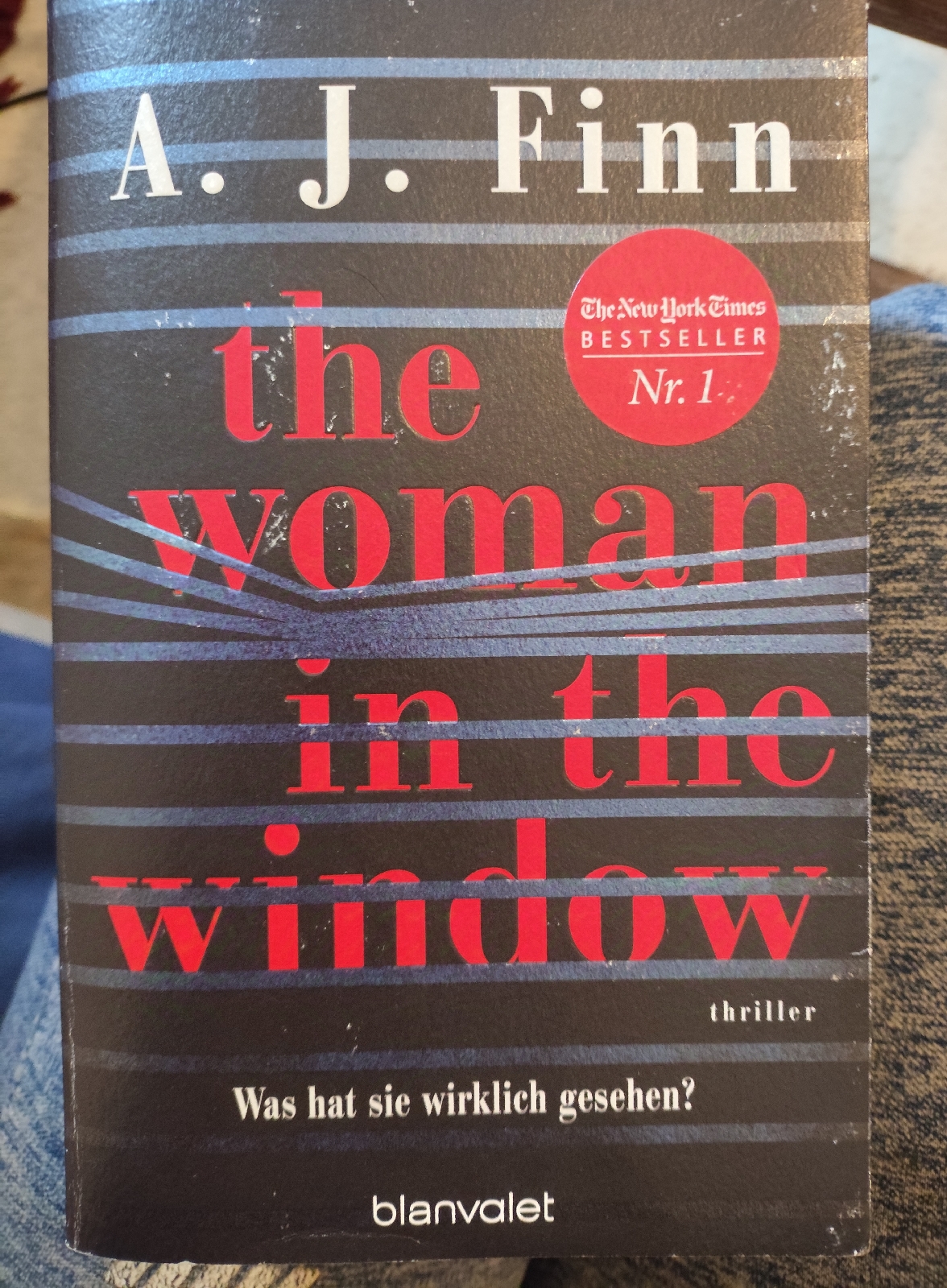
A.J. Finn - Woman in the window (2018)

Es una especie de novela negra, o thriller, un tanto atípico. Interesante para interesados en psicologia, tal vez. La protagonista se llama Anna Fox y sufre de angorafobia y no puede salir de su casa o se desmaya de la excitacion y del miedo. Vive sola, separada de su familia. Ella pasa el tiempo observando los vecinos. Un día observa un crímen en la casa del vecino. Va la policía creer a la loca con problemas de cabeza? Irónicamente, antes, Anna Fox a ejercido ella misma como psicóloga. Ahora mira VHS en blanco y negro y toma demasiado vino. 
(Un poco como la chica en "My year of Rest and relaxation" de Ottesha Moshfegh, aunque no duerme tanto). 
También se cuenta el trauma que la llevó a refugiarse en la casa - esa parte me pareció lo típico que siempre pasa en las pelis o libros, no me gustó. Para resolver el caso y para sacarse ella misma del peligro, va a tener que salir de su casa.
Se lee rápido y fácilmente. Entretiene. Para mí ha sido un 3 o 3,5 de 5 estrellas, o puntos (Mucho mejor que las novelas de M.C. Beaton que leí recientemente, juega en la liga de los libros en serio).

05 enero, 2025

M.C.Beaton - Wellspring of Death (1998)


Situado en el sudoeste de Inglaterra, en los pintorescos pueblos de Cotswolds, Wellspring of death es otro tomo de una Murder mystery serie, de la misma autora que Death of a bore, pero con otra détective (esta vez mujer), llamada Agatha Raisin.
La paz de los pueblitos es interrumpida cuando una empresa de agua mineral quiere explotar un pequeño fuente de agua que brota de un jardín. El consejo de la Junta se dispute, por un lado eso traería dinero y turismo, por el otro lado muchos prefieren mantener sus pueblos con el carácter original y sin incomers. Dos habitantes del pueblo aparecen muertos, tal vez sean peleas entre los viejos que datan de años y salen a la superficie con el asunto del agua mineral.
El director de la compañía de agua comienza un affaire con Agatha que está aún llena de resentimiento por haber discutido con su vecino James con el que salía antes.
Esta vez mi opinión fue: malo y hasta peor como otros del género. Me gustó mucho más el detective hombre de la serie de Escocia (que es un pan de Dios, mientas que ella es una 50añera, un poco bruta, un poco tonta e ingenua, a que le gusta ser flaca y andar con hombres más jóvenes). En 230 páginas hay una sola página de suspenso, es obvio quien es el asesino desde el principio. 

Archivo del Blog

Translate